
Logo designed by Andrew Willoughby and Julia Van Etten
Mission statement: The Paulinella consortium is a group of hobby microscopists and academic researchers working together to identify, describe, grow, and sequence populations of photosynthetic Paulinella.
Photosynthetic Paulinella species are a unique resource for understanding one of the most consequential processes in evolution: primary endosymbiosis, in which one cell engulfs another cell and instead of digesting it, keeps it inside as a permanent, helpful partner. Primary endosymbiosis is very rare but fundamentally shaped life on Earth, giving rise to eukaryotes (mitochondria) and algae (chloroplasts). Both of these events occurred over a billion years ago so they are hard to understand since so much evolution has affected mitochondria and plastids in that time. The photosynthetic amoeba Paulinella represents a more recent primary endosymbiosis event that only occurred around 100 million years ago, exhibiting an intermediate state of organellogenesis (the process that creates new organelles). This means that by studying Paulinella and its photosynthetic organelle (called the chromatophore), we can view an example of primary endosymbiosis in action, rather than retroactively. However, this is easier said than done because only six photosynthetic Paulinella species are known so far and only two of those species have sequenced nuclear genomes that allow us to more fully understand the organisms’ physiology and evolutionary history. This is because these cells are difficult to isolate from nature and grow in the lab. So, to study Paulinella, we need to find more Paulinella! To do so starting from scratch would take a great effort, but luckily, there are many naturalists already collecting water samples and taking photos of the cells they find which occasionally include rare and low-abundance species like photosynthetic Paulinella. In fact, in the last five years, hobby microscopists have recorded more observations of Paulinella cells than have been recorded in the scientific literature in the previous 125 years! By forming collaborations between research labs with resources and an interest in these species and hobbyists who are finding them, we plan to raise awareness of this lineage more broadly within the naturalist community and ultimately, better characterize Paulinella diversity!
Fill out this form if you found Paulinella!
What to look for in your microscope:

P. chromatophora
Lauterborn, 1895
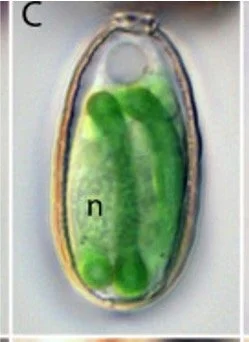
P. longichromatophora
Kim & Park, 2015
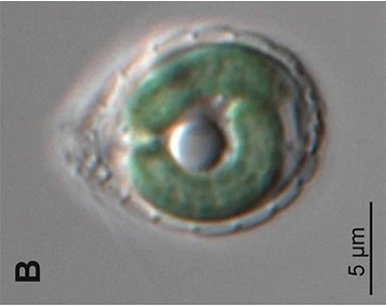
P. micropora
Lhee, Yang, Kim, Anderson,
& Yoon, 2017
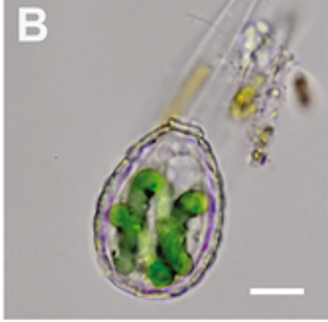
P. acadia
Pardasani, Palka, Leander, & Burki 2025
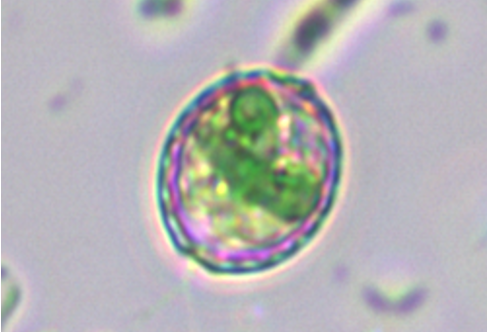
P. murrayi
Van Etten, Burns, Bhattacharya, Han, & Yoon, 2026
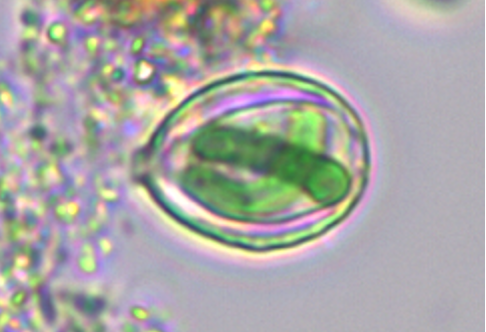
P. marae
Van Etten, Burns, Bhattacharya, Han, & Yoon, 2026
Observations
Follow the latest iNaturalist Paulinella observations
Follow the latest GBIF Paulinella observations
Some interesting historical observations in the US
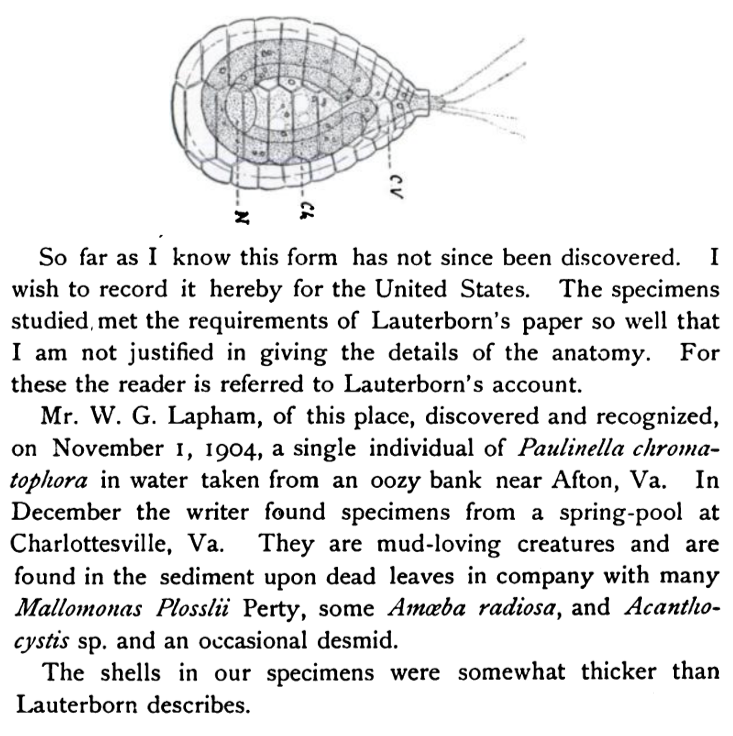
Kepner’s 1905 account from Virginia published in the Biological Bulletin
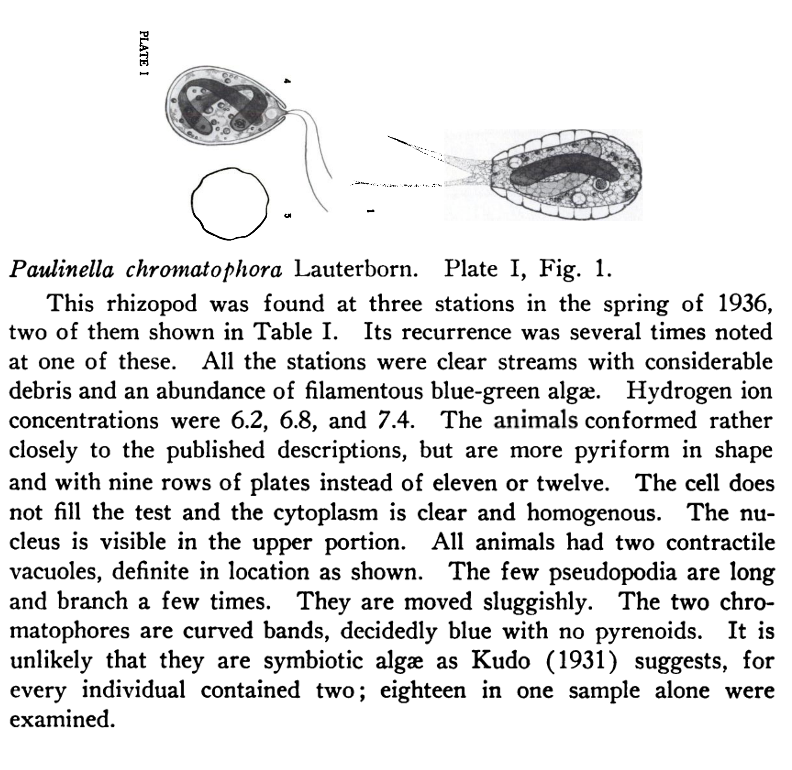
Lackey’s 1936 accounts from Mississippi and Alabama published in the Biological Bulletin
Consortium members
Logo and state abbreviation indicate Paulinella populations and the state they were found in; this project is focused on US populations right now but we hope to expand to other countries in the future
Please email juliave@umd.edu if you would like to join this group or want more information. The more the merrier!






Van Etten lab
University of Maryland
Burns lab
Bigelow Laboratory for Ocean Sciences
Andrew Willoughby
Duke University
Bhattacharya lab
Rutgers University
Hobbyist names forthcoming!
News
Coming soon!